This may seem like it is coming out of left-field. What does tarot have to do with writing? You may even be a little hesitant because you think tarot has to do with fortune telling. I’m here to tell you, tarot can help you write, and you don’t even have to believe in tarot as a fortune telling aid. I’m going to do a few different blogs concerning tarot as a writing aid. Today I’m going to introduce you to what it is.
Now, I can’t take credit for coming up with this. I found the book Tarot for Writers in my local metaphysical shop. It is written by Corrine Kenner who is certified taro master and teaches workshops and classes on the subject. So I’m going to be relaying some of the information in her book and what I have learned by using this writing aid.
If you want your own copy, you can get it here: Tarot for Writers
Before I found the book, I had dabbled in taro before, so I knew my way around a tarot deck to an extent. It’s completely okay if you have never even touched a tarot deck before because you will learn as you go. If you’re still not certain about this, authors such as Stephan King and John Steinbeck have used tarot to help them write.
Just so you know, there are affiliate links in this blog post.
You are going to need to get yourself a tarot deck. I recently purchased the Eight Coins Tattoo Tarot at the same store I got the book. If you already have experience with tarot, then these would be a good choice because they have gorgeous pictures. Word to the wise, there are four cards that have doubles in the deck, so make sure you take out the extras. I had to learn that the hard way.
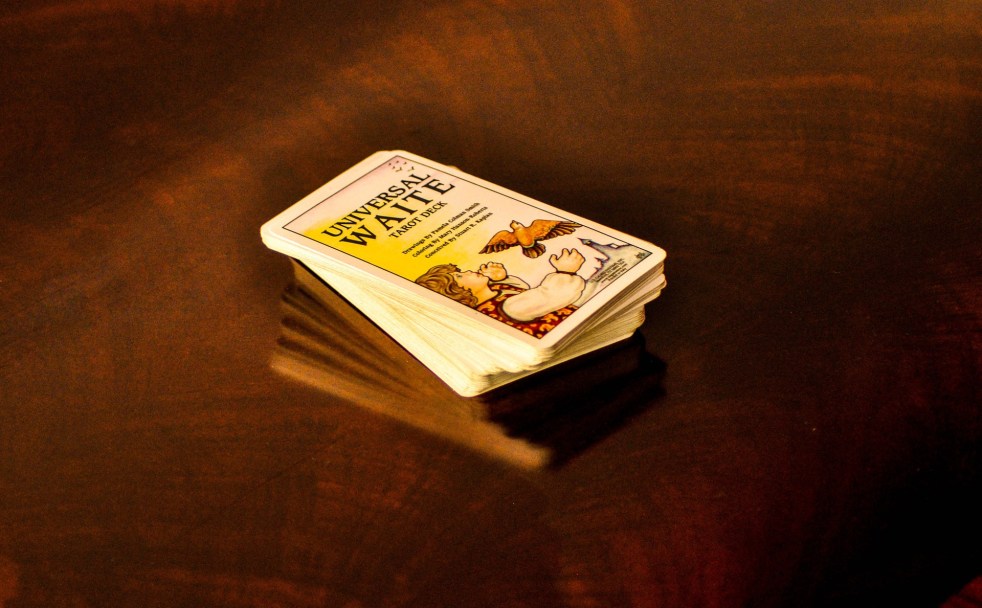
If you’re new to tarot, you will want to stick to an original deck so that you can have the regular images to help you interpret the cards. Try this deck: The Rider Tarot Deck
To get you started with tarot, we’re going to go over the basics of tarot. A tarot deck and writing hold a lot of power. Both need a person behind it to harness and use that power. The amazing thing about tarot is that they already are in line with many Western mystery traditions, like Kabbala, merology, and alchemy. That doesn’t mean you should think tarot is too hard to learn.
When you open your first bot of tarot cards you’re going to notice that there is a lot of them,78 to be exact. The second thing is that there are two groups of cards; the Major Arcana and the Minor Arcana.
The Major Arcana cards are the archetypes. These serve as a framework to understand the world. In classic writing, archetypal characters include Odysseus, who battled the archetypal villain the one-eyed Cyclops. You can also see these in modern writing like Luke Skywalker and Frankenstein’s monster. Let’s go through these Major Arcana:
0. The Fool – This character is the happy wanderer who is able to see the world through a child’s eyes. Most tarot people agree that the Fool represents each of us. People who are out to learn, off on an adventure, and naive travelers.
1. The Magician – He is the cunning and skilled master of his surveys. He is representative of a person who has control of their life’s techniques and tools. Many tarot decks will have him drawn at a table that holds a wand, pentacle, sword, and a cup.
2. The High Priestess – She is the enigmatic keeper of the spiritual secrets. She is always guarded and secretive and knows life’s secret, but she only shares secrets with those that deserve them.
3. The Empress – She is the archetypal mother who protects and nurtures humankind.
4. The Emperor – He is the authoritative provider and protector who rules the world. He is the father figure and brings order out of the chaos in order for civilization to prosper.
5. The Hierophant – He is the symbol of influence and authority. He is the top of his hierarchy and is determined to maintain his traditions.
6. The Lovers – These characters show the principles of attraction and opposition. While this will encourage the romantics out there, it can’t be forgotten that is could signify a choice between two equal desires.
7. The Chariot – This is a vehicle for change and motion. The charioteer is in control of his drive even when they look to be in opposition of each other.
8. Strength – This character is the sweet woman that has the heart of a lion. She carefully controls the jaws of a lion and controls the force that could easily kill her.
9. The Hermit – This character is reclusive and has removed himself from the hustle and bustle of regular life. He looks back on spiritual problems and carries the light of wisdom to help guide those around him.
10. The Wheel of Fortune – This is the wheel of fate and destiny. Since nothing but change is certain, the While of Fortune tells us that everything that goes up as to come down.
11. Justice – This character is the enforcer and giver of the law. She holds a double-edged sword to remind everybody that fairness cuts both ways.
12. The Hanged Man – He sacrifices his passions and comfort knowing that better things are going to happen because of it. He’s a visionary that sacrifices one thing to be rewarded with something better.
13. Death – This is not at all a negative card that people believe it to be. It is a card of transition. The Grim Reapers clears out those who can’t survive. The card tells you that there is completion and a new start to something else.
14. Temperance – This character is the archangel of balance. By using grace and dexterity, she shows you that moderation is able to bring you wholeness.
15. The Devil – This shows us the shadowy and dark parts of our world. He shows you how ill-conceived passions and selfish devotion to material things can tie you down and keep you away from happiness.
16. The Tower – This shows you a forceful clearing of energy that will hit like lightening, and it is able to shake overbuilt structures to their foundation.
17. The Star – This is your shining light in the darkness. Much like a goddess of the night, she is the spirit who provides guidance and hope.
18. The Moon – This gives you the always changing mirror of the sun and is a symbol of the unconscious mind. It shows you mysteries and secrets that you might not understand or recognize.
19. The Sun – This shows you action and consciousness. It is the center of everything and provides us with life and heat.
20. Judgment – This heralds the dawn of new life, and provides you with a reminder of how powerful forgiveness is.
21. The World – This shows you the never-ending dance of life. This is the card of success and completion. It also gives you the chance to start something new.
After those 21 cards, you have the remaining 56 that are known as the Minor Arcana, which means lesser secrets. These show us ordinary people that go about their normal lives.
There are four suits, much like a regular deck of cards. These suits include pentacles, wands, cups, and swords. These can seem more complicated to remember the meaning, but the great thing is, the pictures on the cards help you. These images at first may seem crazy, but the longer you study them the more you will see the method to the madness. Each of the four suits represents different realms of life.
- Wands represent the spiritual experience.
- Cups represent the emotional affairs.
- Swords represents communication and thought.
- Pentacles represent the financial, physical, and material realities.
Furthermore, each of these suits are connected to the different elements. This can help you when it comes to interpreting your cards.
Wands = Fire
Wands normally refer to the driving forces of special interests, work, and career that inspires passion. In the majority of tarot decks, wands are represented by branches from leafy trees. This is your cue that it represents fire. Branches are able to be lit on fire.
Cups = Water
Cups hold the affairs of emotions and are connected to relationships and love. You can obviously remember that cups are connected to water because they are able to hold water.
Swords = Air
Since swords are able to be moved through the air, swords deal with the heady realm of intellect. They show how people communicate and think. This suit needs to be close to writers because they cut through the confusion and aim you towards your point.
Pentacles = Earth
These cards are tangible realities of the material world. They are often connected to property and money, and the things that people hold dear to them on a spiritual and emotional level.
Each suit also has four face cards that represent the entire family: mother, father, daughter, and son.
Pages are the enthusiastic and young person. They are often children and messengers, or students. During the Renaissance, pages were messengers for the royal court.
Knights have grown out of their roles of the childlike page and are young adults who have to make their own way. Knights were traditionally sent of quests to prove that they were smart and strong enough to succeed.
Queens are the women who have proven themselves. They have already had to face their demons and have shown that they are competent and mature. They are the ideal woman and role model. They often suggest a caring person that works to nurture and protect their realm.
Kings are the experienced leaders and protectors who have succeeded on their quests that they had to undertake as knights. They are alert, authoritarian, and assertive. They could suggest that somebody is willing to wage war for something they believe in.
That’s all we’re going to get into for today. I know it’s a lot, but we’ll continue to go over these things, and before long you will be able to use a tarot deck to help you with your writing. It’s especially great if you are ever faced with writer’s block.
It’s said that the shuffling of the cards is the earth, and the pattering of the cards is the rain, and the beating of the cards is the wind, and the pointing of the cards is the fire. That’s of the four suits. But the Greater Trumps, it’s said, are the meaning of all process and the measure of the everlasting dance. – Charles Williams


 by Corrine Kenner. If you haven’t read the first blog post, make sure you do so before continuing. It provides you will important information about the cards and how to interpret them. You can read it
 Let’s dive into these four spreads that can provide you with the plot of your story.
 at the same store I got the book. If you already have experience with tarot, then these would be a good choice because they have gorgeous pictures. Word to the wise, there are four cards that have doubles in the deck, so make sure you take out the extras. I had to learn that the hard way.
 Pen to Paper